
What are the Priorities for Shark and Ray Research and Conservation?
A synthesis of what we know—and what still limits effective action
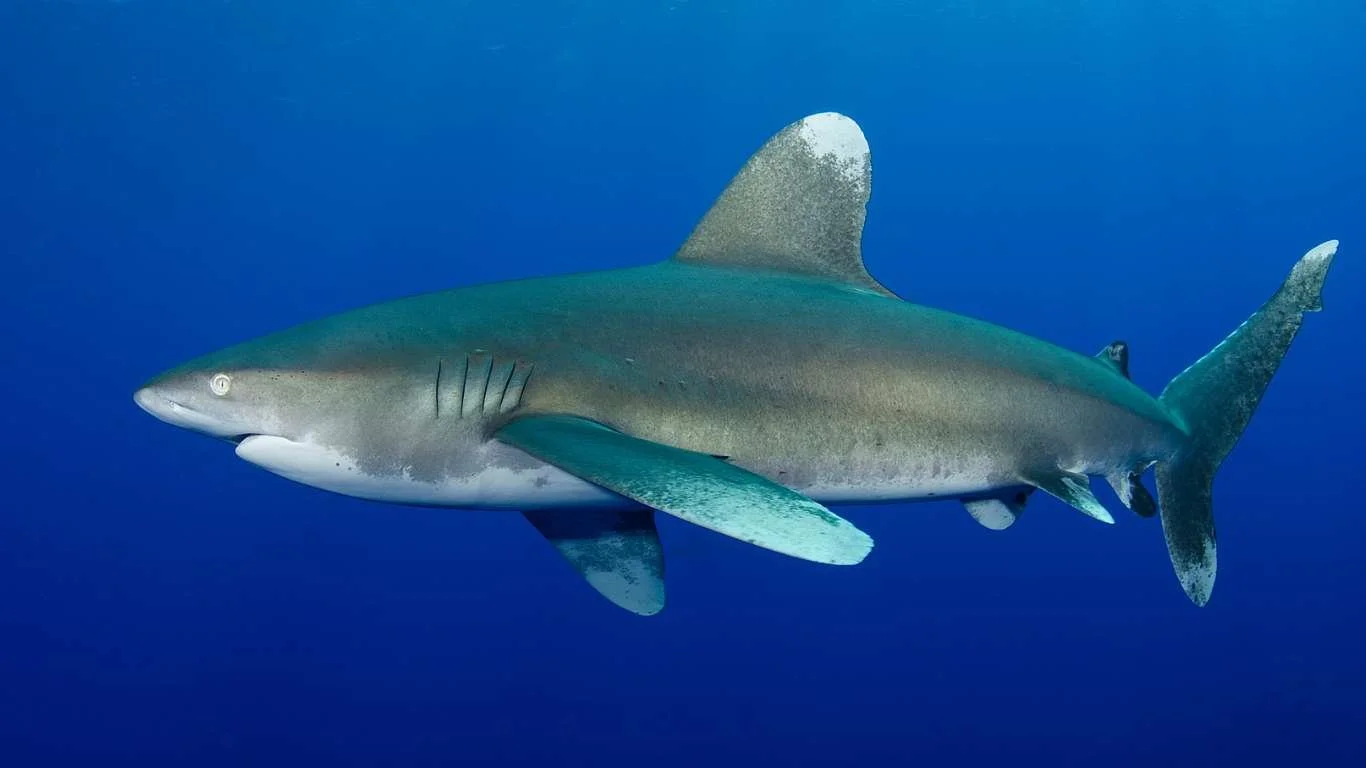
Over the past few decades, concern for sharks and rays has shifted from isolated conservation efforts to a coordinated global research agenda.
Elasmobranchs are now widely recognized as both ecologically essential and highly vulnerable to exploitation. At the same time, they are increasingly valued in tourism, ecosystem function, and cultural systems. Despite this momentum, a consistent challenge remains: we still lack the data needed to fully understand population status, threats, and the effectiveness of conservation actions across most species and regions.
This raises a central question: What does the global research community see as the most important priorities for improving shark and ray conservation?
What this study actually does
In “Emergent Research and Priorities for Shark and Ray Conservation” (Endangered Species Research), we brought together a global group of elasmobranch scientists to identify and synthesize the most pressing research needs in the field.
The process included surveying leading experts, consolidating their ranked priorities, and convening a working group of researchers across institutions and disciplines to refine and structure these priorities into key themes.
The goal was not to re-summarize known biology, but to identify where knowledge is missing, where conservation tools are underdeveloped, and where research can most effectively improve outcomes for sharks and rays.
What the study shows
Across expert responses and synthesis discussions, a clear pattern emerged: The biggest constraints in shark and ray conservation are not lack of concern—but gaps in data, monitoring, and implementation.
These gaps cluster into three major areas.
1. We still lack basic population and threat data for most species. Despite decades of research, only a small fraction of shark and ray populations have been formally assessed. Many species remain Data Deficient, meaning their status cannot be reliably evaluated. At the same time, almost all known elasmobranchs are exposed to fishing mortality in some form, either targeted or incidental, making it difficult to separate natural variability from human-driven decline without stronger monitoring systems.
2. Conservation tools exist—but their effectiveness is unevenly measured. A wide range of management approaches are now in use, including international trade regulations, fisheries restrictions, marine protected areas, and shark sanctuaries. However, the effectiveness of these tools is often difficult to quantify. In many cases, outcomes are assumed rather than measured, particularly where baseline data are missing or enforcement is inconsistent. This creates a major limitation: conservation action is expanding faster than our ability to evaluate its impact.
3. Bycatch and enforcement remain dominant unresolved pressures. Across regions and species, incidental catch in fisheries remains one of the most significant drivers of mortality. Even where protections exist on paper, enforcement capacity, monitoring coverage, and compliance vary widely. This leads to persistent uncertainty about actual mortality rates and the real-world effectiveness of regulations. These constraints are compounded in regions with limited resources for monitoring and reporting.
Why this matters for shark and ray populations
This synthesis highlights a structural issue in elasmobranch conservation: We are operating in a system where ecological complexity is high, but observation capacity is limited. As a result, conservation decisions are often made with incomplete or uneven information, particularly for wide-ranging or data-poor species.
This does not mean progress is absent. On the contrary, there has been substantial growth in tools, awareness, and international policy attention. But it does mean that the next phase of conservation will depend less on identifying threats—and more on improving how we measure and respond to them.
The key insight: conservation is now a data problem as much as a biological one
One of the clearest outcomes of this work is that the limiting factor in many systems is not lack of knowledge about sharks and rays in general, but lack of consistent, scalable, and comparable data across regions.
This affects every part of conservation planning:
population trend estimation
evaluation of management effectiveness
identification of priority areas and
assessment of cumulative human impacts
Without this foundation, even well-designed policies are difficult to assess or adapt over time.
What changes now
The direction outlined by this synthesis is increasingly clear:
From fragmented studies of individual species or regions to integrated, global-scale monitoring and prioritization systems
From static assessments of status to continuous tracking of populations, threats, and management outcomes
From expert-driven inference alone to hybrid systems that combine science, citizen observations, and emerging technologies