
Impact
Turning observations into evidence that drives action.
For over two decades, our research has helped reveal patterns in marine ecosystems, inform management decisions, and advance conservation science.
Now, with eOceans, we’re building the infrastructure to make this process faster, more transparent, and more scalable — helping organizations transform complex datasets into continuously updated evidence.
Explore the research behind eOceans →

New policies for 100+ species
New policies, closed loopholes for 19.4 million km²
Across 90 regions in 38 countries, eOceans has mobilized cross-sector partnerships to turn data into measurable conservation and economic outcomes. Our work has helped protect over 100 species at the international scale and 19 million km² of ocean, while delivering actionable, demand-driven insights that support real-world decisions across communities, industry, and policy.
Explore the research behind eOceans →

International Trade Threatens Mantas
Manta rays generate hundreds of millions in tourism revenue in just a few communities. So, alarms rang when they started to disappear.
By crowdsourcing 600,000+ observations from divers in 90 regions of the world, we revealed they were being caught and sold in markets around the world. But, only two countries reported catching them.
This evidence helped secure their endangered species status, leading to stronger protections — helping people, mantas, and planet.

Smart Fisheries
Fisheries are major economic engines — supporting jobs, food security, and coastal economies — but long-term profitability depends on credible data and responsible management. Years of mistrust and poor reporting have weakened both.
The Smart Fishery Tracker™ on eOceans® turns fishers into data leaders — improving catch transparency, reducing unreported harvests, and strengthening the evidence needed for sustainable quotas and market access. Better data protects fish stocks, secures livelihoods, and builds the trust that modern seafood markets demand.

Great Fiji Shark Count
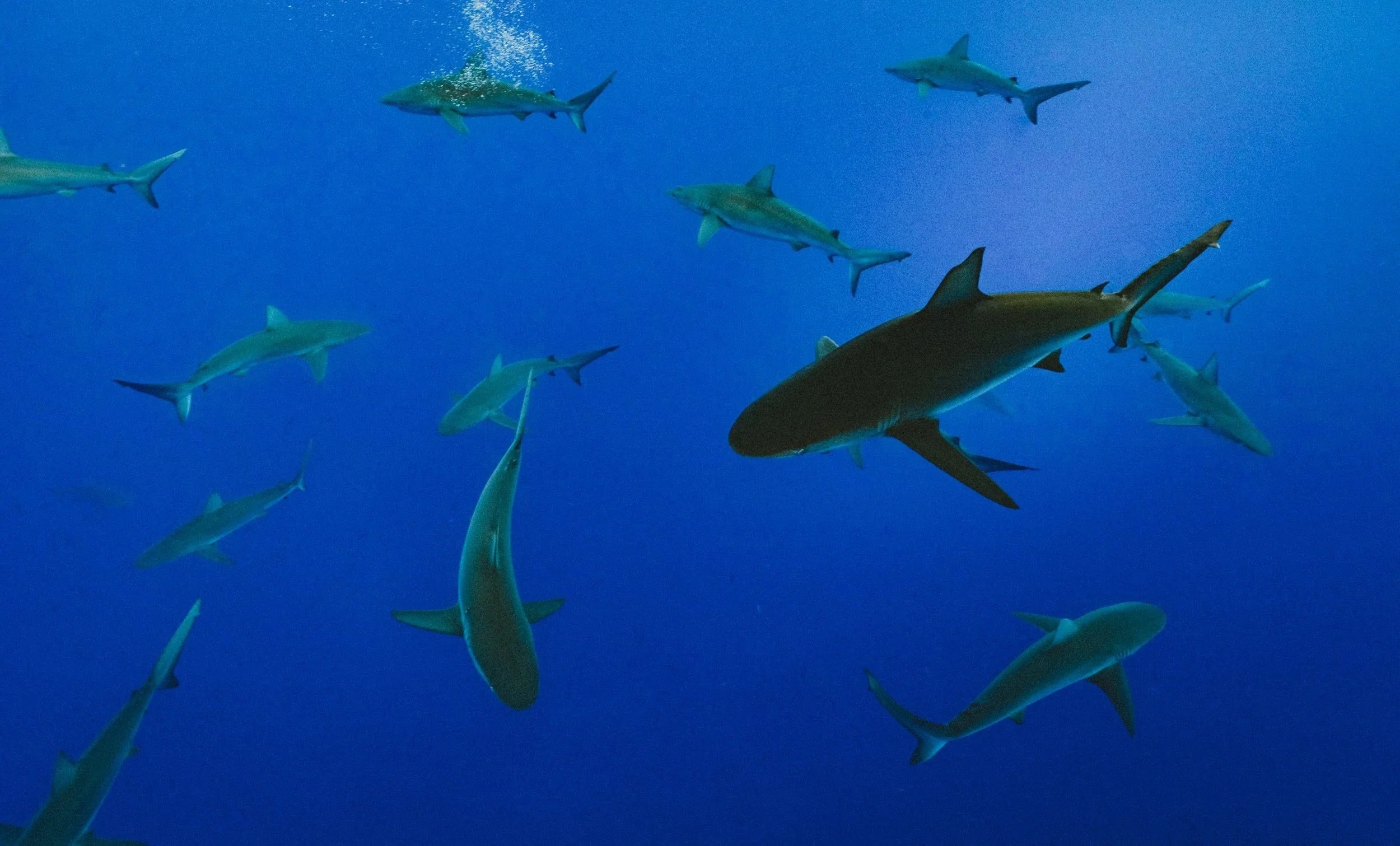
Tourism depends on healthy oceans, but management often lags behind. In Fiji, divers recorded 146,304 shark observations across 592 sites — covering 45% of dives and 74% of key sites.
This real-world data now informs smarter conservation, targeted management, and future research — protecting the ocean’s health and the tourism revenue that depends on it.

Emergent Research and Priorities for Shark and R
ay Conservation
Sharks are a globally valuable species, supporting billions in tourism and fisheries while maintaining healthy ocean ecosystems. Effective management requires understanding population trends, threats, and conservation outcomes. Citizen science fills a critical gap by providing large-scale observational data, complementing traditional research and monitoring methods. Our work contributed to this effort, demonstrating how thousands of divers and local explorers can generate actionable insights to guide sustainable management and policy decisions.
Access paper

Priorities for Shark Conservation in Thailand
Sharks support Thailand’s marine tourism and fisheries, generating millions in revenue and sustaining local livelihoods. Data from 9,524 dives over five years provided the country’s first shark population trends, guiding science, management, and community-led programs that protect both sharks and the economic value they provide.
Access paper

Evaluating Global Shark Sanctuaries
Shark sanctuaries represent major policy and financial investments to protect species that support tourism, fisheries, and coastal economies. We evaluated their performance using on-the-water insights from local ocean experts — helping determine whether these protections are delivering measurable ecological and economic returns, and where improvements are needed.

The Role of Tourism
in Conservation
Marine tourism depends on healthy wildlife — and the people who guide these experiences are on the water every day. Visiting the same sites and often encountering the same species and individuals, tourism operators generate a consistent stream of observations that traditional research cannot match at scale.
Their data not only fills critical knowledge gaps, but strengthens the foundation for sustainable management — protecting the wildlife that attracts visitors and the economic value that depends on it.

Citizen Science: A Best Practice for Shark & Ray Tourism
Shark and ray tourism depends on healthy, predictable wildlife encounters — the foundation of a reliable customer experience and long-term revenue. Citizen science is a best practice: when tourism operators collaborate with scientists, they generate the data needed to safeguard the species that drive their industry.
Access guide

Biases in Visual Censuses Skew Ecological Descriptions
Management decisions in fisheries and marine tourism rely on accurate data. When visual censuses overestimate mobile species, biomass figures become inflated — distorting stock assessments, recovery plans, and investment decisions.
Improving survey accuracy reduces financial risk and protects the long-term economic value of ocean resources.

Everyday Observations are Necessary for Science
Scientific surveys provide critical insights — but they capture only brief, infrequent snapshots of a dynamic ocean. For industries and governments managing marine resources, that leaves costly blind spots.
Integrating everyday observations from fishers, tourism operators, and other ocean users expands monitoring coverage, reduces uncertainty, and strengthens the evidence base behind policy, investment, and sustainability decisions.
Join the eOceans global teams with the FREE eOceans app.
Many of these projects are now ongoing in the eOceans app—eManta, eShark, Marine Heatwaves, etc. Now you can join anytime from any ocean or coastline in the world. Start logging you real-time, on-site observations and keep the momentum growing.

