Can Recreational Divers Reliably Monitor Sharks and Rays? Evidence Shows They Can Contribute Robust, Scalable Data
Divers as distributed ocean observers
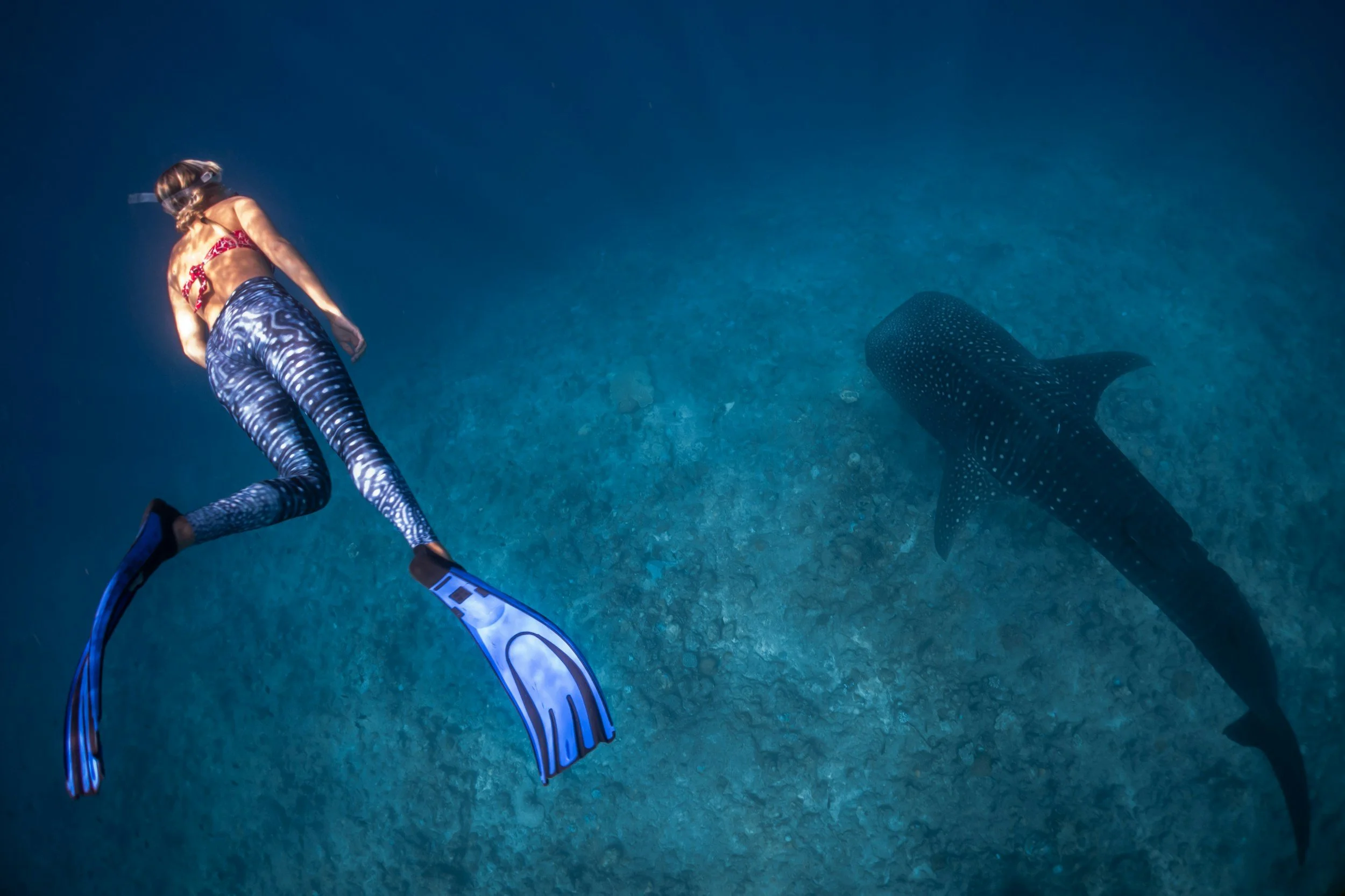
Across most marine ecosystems, one of the biggest limitations in understanding shark and ray populations is simply coverage.
Traditional scientific surveys are powerful but constrained—they are expensive, spatially limited, and infrequent. Meanwhile, divers are in the water every day, across thousands of sites globally, observing the same species scientists are trying to track.
This study asks a straightforward question:
Can those everyday observations be used as a reliable source of ecological data?
What this study actually does
In “Assessing the Value of Recreational Divers for Censusing Elasmobranchs” (Journal of Fish Biology), we evaluated whether recreational divers can reliably detect and count sharks and rays (elasmobranchs) across different conditions and skill levels.
The work combined three complementary approaches:
simulation modelling of detection rates under different survey conditions
field comparisons between experienced and inexperienced divers
structured interviews with dive professionals documenting long-term observations
Together, these approaches allowed us to test not just whether divers see sharks—but how consistent, scalable, and usable their observations are for population monitoring.
What the study shows
A consistent result emerges across all three lines of evidence: Recreational divers can reliably detect and count elasmobranchs, including rare and mobile species.
This is particularly important because sharks and rays are often low-density, wide-ranging animals—exactly the type of species that are difficult to monitor using conventional survey designs.
Several key findings stand out:
1. Detection is strong, even for rare species. Divers are effective at recording presence of sharks and rays, especially in systems where animals are conspicuous and mobile.
2. Experience matters less than expected. In field comparisons, inexperienced divers performed similarly to experienced divers in detecting and counting elasmobranchs under survey conditions.
3. Broad spatial coverage is a major advantage. Recreational diving activity spans large geographic areas and long time periods, creating continuous observational coverage that is difficult to replicate with research-only surveys.
4. Presence data is highly informative. Even without formal density measurements, repeated observations across sites and time provide meaningful information on distribution, relative abundance, and trends.
Why this matters for marine monitoring
Sharks and rays are among the most data-limited groups in the ocean, despite being ecologically important and often threatened.
At the same time, they are also among the most observable large marine animals, frequently encountered by divers during routine recreational activity.
This creates a unique opportunity:
A distributed network of observers already exists in the system—it just hasn’t always been structured as a data stream.
When appropriately designed, this type of observation can:
extend monitoring across large spatial scales
improve detection of rare or seasonal species
support early identification of population changes
complement scientific survey programs
Importantly, this is not a replacement for scientific monitoring—but a complementary layer that expands coverage.
What the data add to traditional science
The study highlights that different data types answer different questions.
Scientific surveys are well suited for estimating abundance and structure at specific locations.
Recreational diver observations are particularly strong for:
broad-scale distribution patterns
presence/absence trends over time
rare species detection
long-term ecological change signals
When combined, these data streams provide a more complete picture of elasmobranch populations than either can alone.
The key limitation: structure matters
While diver-generated data are valuable, their usefulness depends on how they are collected and interpreted.
Key considerations include:
species identification accuracy
consistency in recording effort (time, depth, location)
environmental conditions influencing detectability
differences in observation intensity across sites
These are not barriers to use—but they are essential for transforming observations into standardized datasets.
When structured properly, the variability becomes manageable and interpretable through statistical and modelling approaches.
What changes now
This work supports a broader shift in marine science: From isolated, survey-based snapshots of ecosystems to continuous, distributed observation systems.
Recreational divers represent one of the largest untapped observational networks in coastal systems.
The next step is not just encouraging participation—but designing systems that ensure:
consistent data structure
integration with scientific surveys
real-time or near-real-time analysis
feedback loops for validation and interpretation