How Do Diverse Species Co-Exist in the Same Place? Evidence Shows They Partition Habitat at Fine Ecological Scales
Shared spaces, different strategies
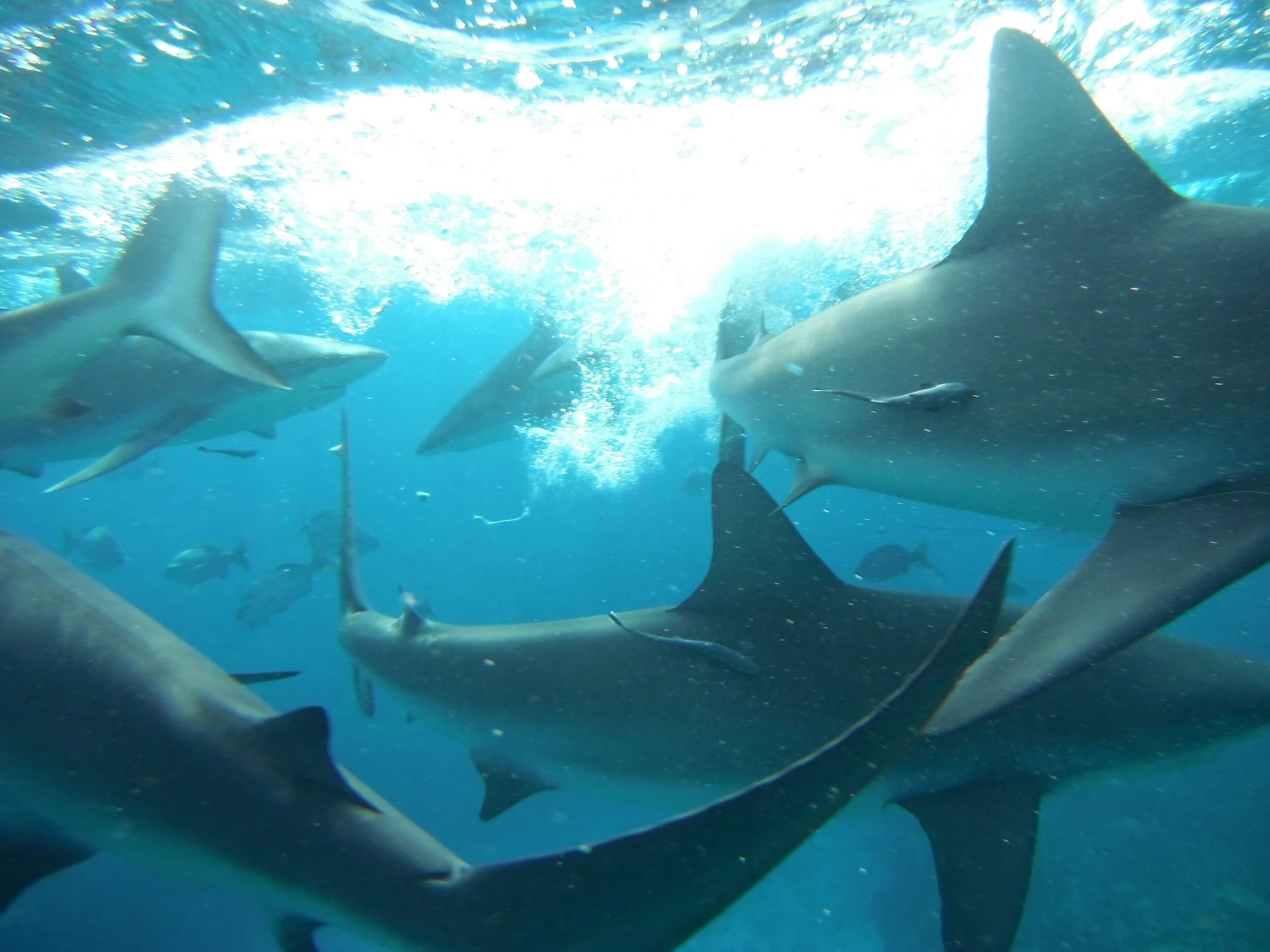
Coastal nursery areas are some of the most biologically active—and crowded—ecosystems in the ocean.
They often host multiple shark species at the same time, all relying on the same general habitat for early life stages. At first glance, this raises a simple question: If they are using the same nursery areas, why don’t they outcompete each other?
The answer is that “shared habitat” does not mean “shared niche.”
What this study actually does
In “Characterizing and predicting essential habitat features for juvenile coastal sharks” (Marine Ecology), we examined how six juvenile shark species use coastal nursery habitats in the Northern Gulf of Mexico over a ten-year period.
Using fisheries-independent gillnet survey data (2000–2010), we analysed how environmental conditions—such as temperature, depth, and salinity—shape where each species occurs within shared nursery systems.
The goal was to understand not just where juvenile sharks are found, but how multiple species can occupy the same general region while avoiding direct ecological overlap.
What the study shows
Across all surveyed nursery areas, we found that multiple juvenile shark species co-occur in the same broad geographic locations.
However, within those shared spaces, each species consistently selected different combinations of environmental conditions.
This pattern reveals a key mechanism of coexistence: Species separate along environmental gradients
Rather than competing directly in identical microhabitats, juvenile sharks partition space using:
Temperature preferences
Depth preferences
Salinity tolerance ranges
Each species occupies a slightly different “slice” of the environment within the same nursery region.
Examples of habitat partitioning
Even within a shared coastal system, species showed distinct ecological preferences:
Blacktip sharks favored warmer, mid-depth areas
Bonnethead sharks preferred warm waters with mid-range salinity
Finetooth sharks were more common in lower salinity zones
Scalloped hammerheads occurred in warmer, higher salinity areas
Atlantic sharpnose sharks used deeper, warm-water zones
Spinner sharks were associated with deeper, warm habitats
These differences are subtle—but ecologically important.
They reduce direct competition while allowing multiple species to use the same nursery system simultaneously.
Why this matters for shark populations
Nursery habitats are not interchangeable.
Even within a single coastal region, small differences in environmental conditions determine whether a species can successfully use that area for growth and survival.
This means that protecting “a nursery area” is not enough on its own.
Effective conservation requires protecting:
the full range of temperature conditions
depth gradients within nursery zones
salinity variation across coastal systems
and the spatial structure that supports multiple species simultaneously
Loss or alteration of any one of these components can disproportionately affect specific species.
The key insight: coexistence depends on environmental diversity
This study shows that biodiversity is not only about how many species exist in a region—it is also about how finely structured the environment is.
Coexistence is enabled by habitat heterogeneity.
When environmental gradients are intact, multiple shark species can occupy the same general area without direct competition.
When those gradients are simplified or disrupted, habitat options shrink—and so does biodiversity.
Why this matters for management and conservation
Nursery areas are often treated as single management units.
But this research suggests they function more like layered ecological mosaics, where different species depend on different conditions within the same space.
This has direct implications for:
coastal development and habitat alteration
estuarine management and freshwater input changes
marine protected area design
and fisheries interactions in shallow coastal systems