What can I do with eOceans?
Built for people who need to get the science right, today.
Whether you're responsible for an environmental impact assessment, long-term monitoring program, fisheries management plan, marine protected area, biodiversity strategy, restoration initiative, pollution assessment, BBNJ implementation, regulatory compliance, or conservation program—or you're investigating an emerging issue that has never been systematically monitored before—your decisions depend on timely, trusted evidence.
Whether your information comes from field teams, consultants, researchers, government agencies, industry partners, Indigenous and local communities, citizen scientists, stakeholders, automated sensors, or existing databases, eOceans brings it together into one transparent, quantitative, and decision-ready system.
From protecting wildlife and understanding environmental risks to evaluating conservation outcomes, informing policy, demonstrating compliance, and measuring environmental change, eOceans helps organizations generate trusted evidence faster, more consistently, and at significantly lower cost than traditional workflows.
What can eOceans help me do?
eOceans supports the complete journey from survey design, to collecting high-quality data, reporting, and decisions.
Design
Create monitoring programs, surveys, projects, and data collection systems tailored to your objectives.
Collect
Capture standardized observations from staff, consultants, researchers, community members, industry partners, or citizen scientists using web and mobile tools. Review and validate data as it comes in.
Integrate
Combine multiple datasets, organizations, historical records, sensors, and stakeholder contributions into one consistent evidence base.
Analyze
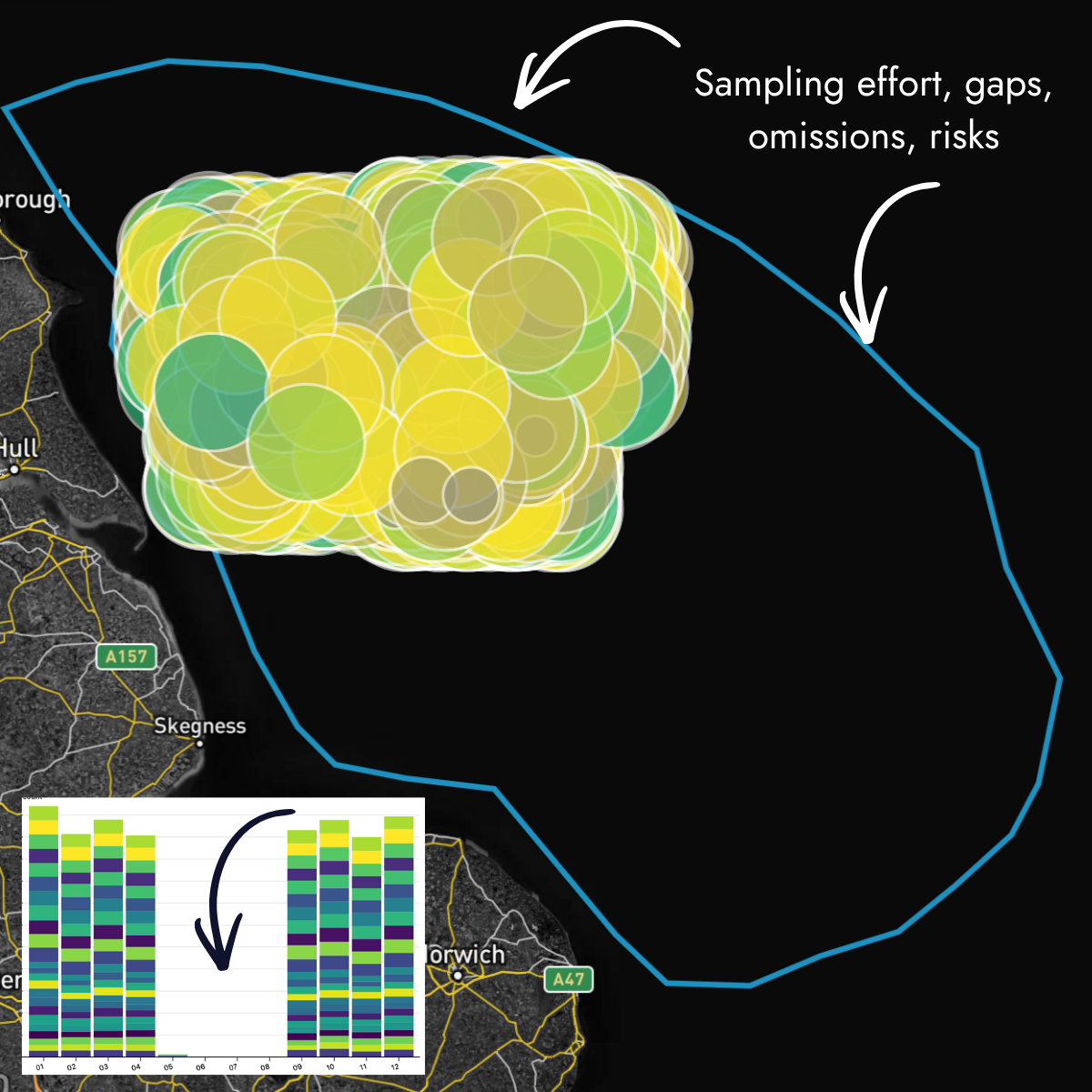
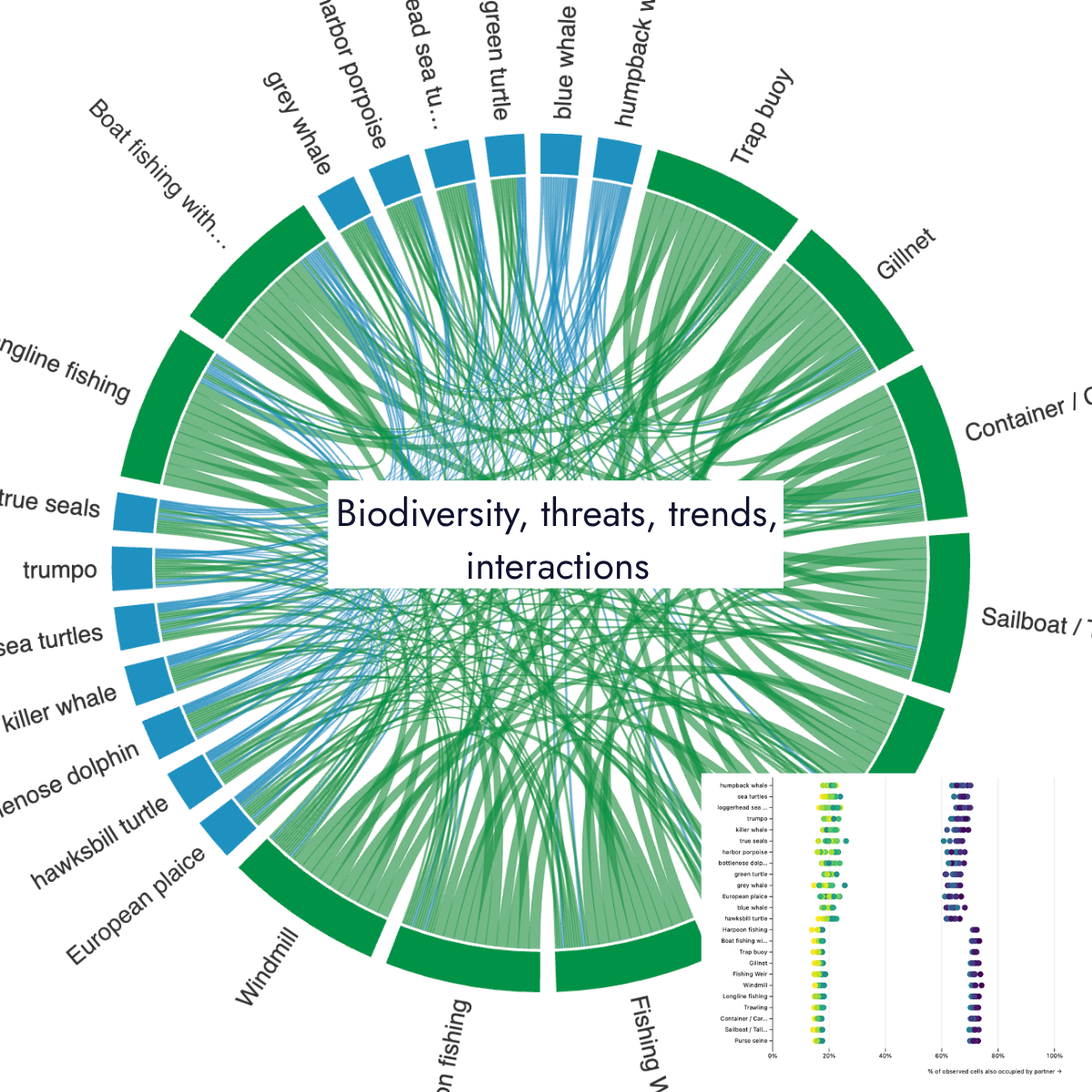
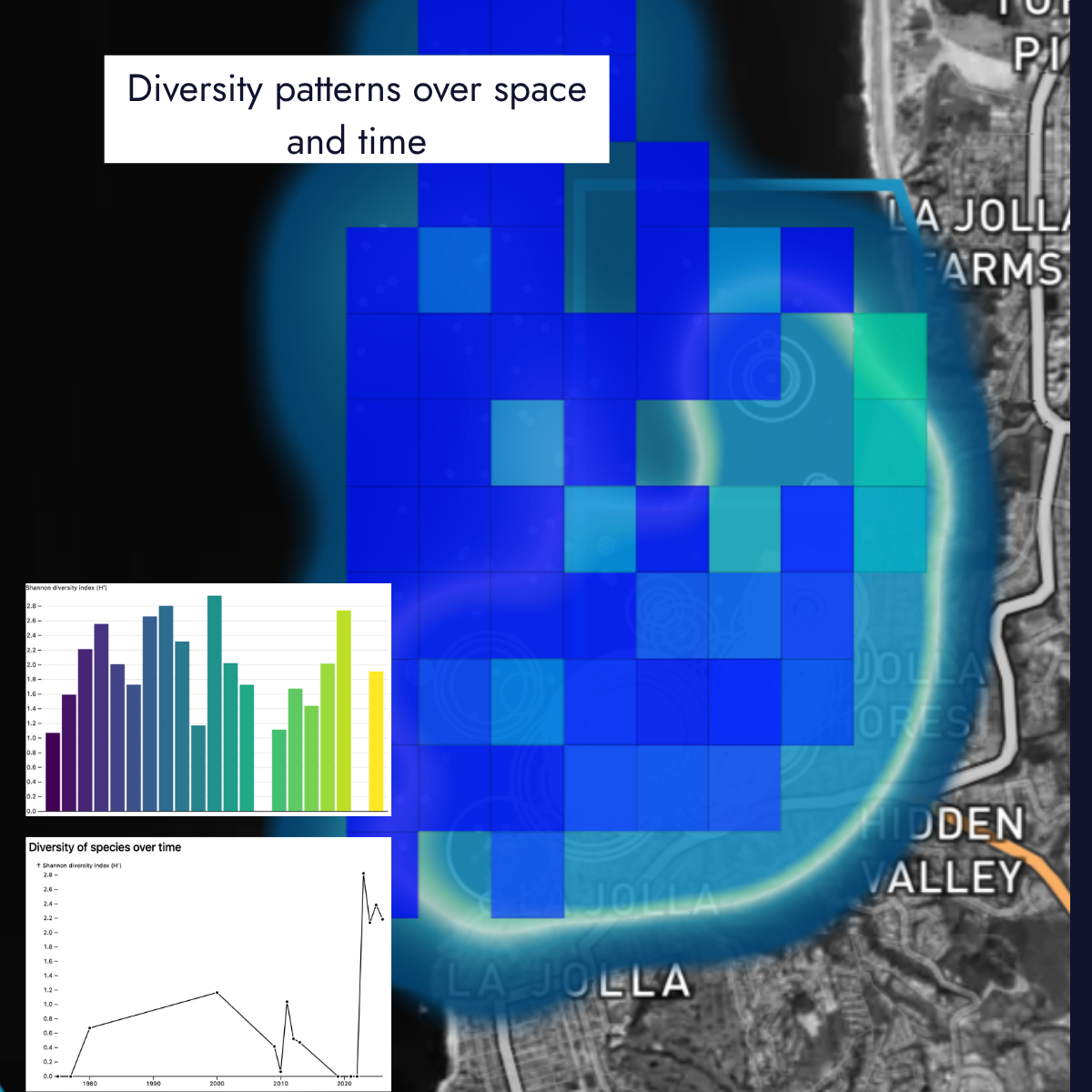
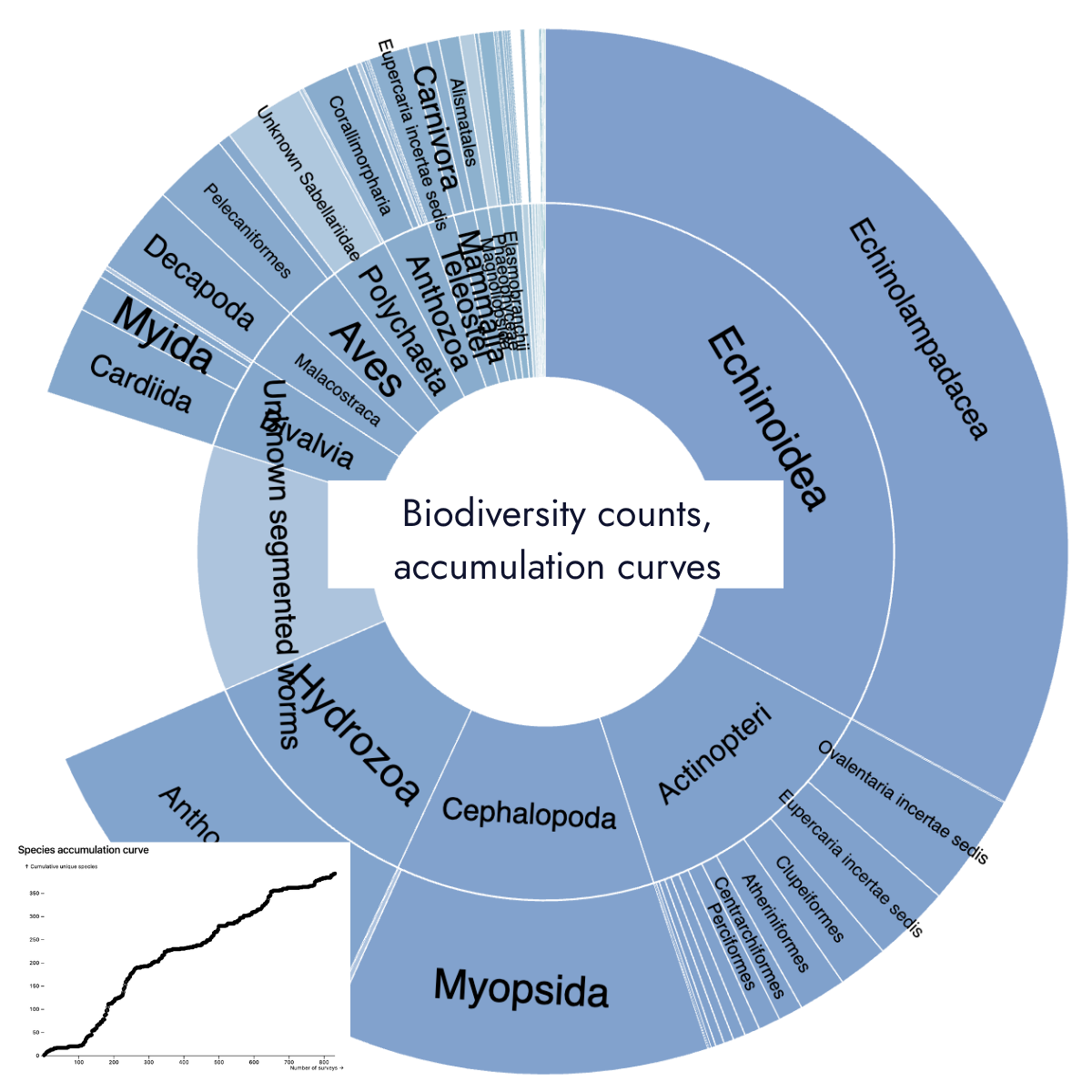
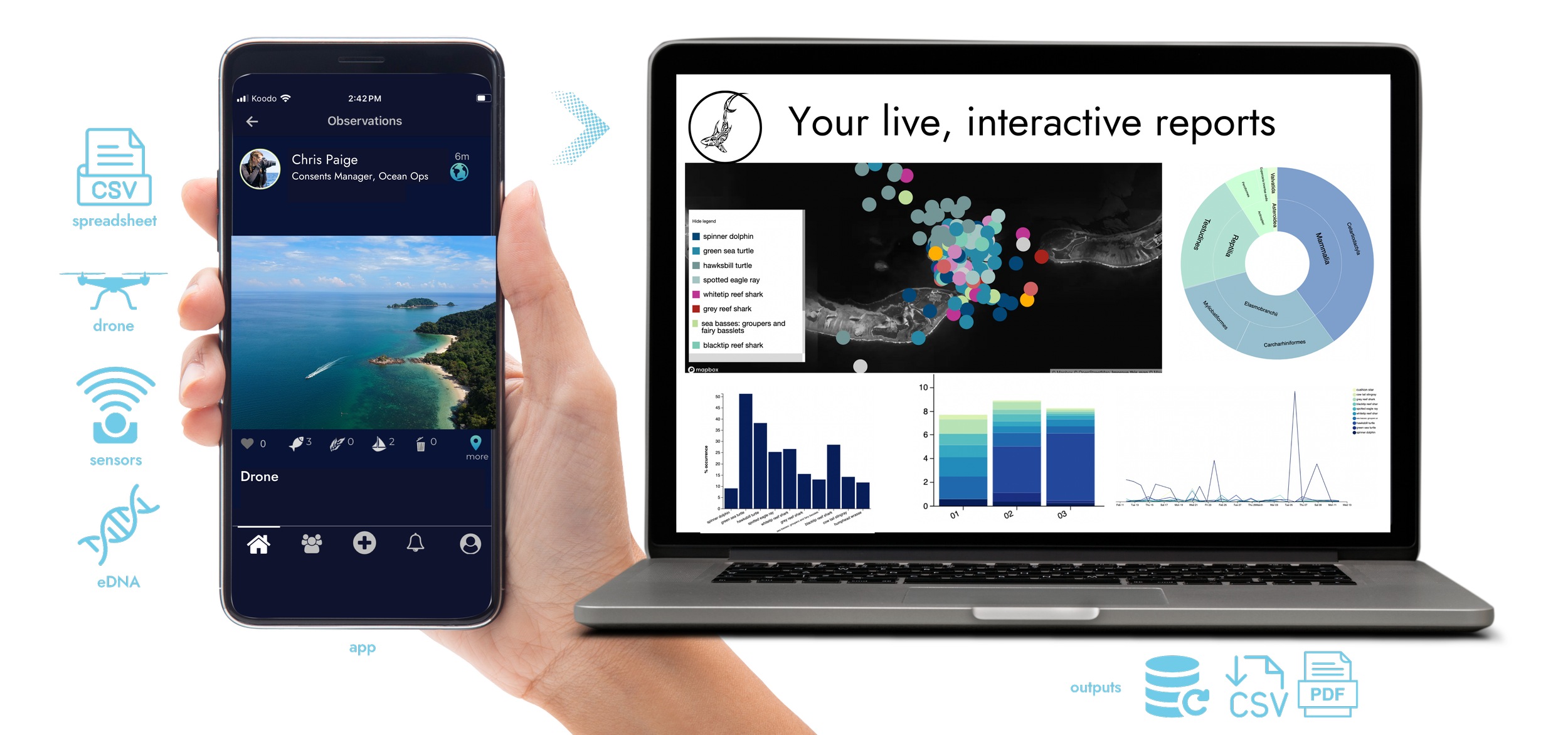
Automatically generate quantitative summaries, indicators, trends, maps, dashboards, spatial analyses, and reports as new information arrives.
Understand
Identify patterns, risks, changes, opportunities, and emerging issues across space and time.
Share
Publish interactive results, communicate progress, engage stakeholders, and support transparent decision-making.
Decide
Support planning, management, permitting, compliance, research, investment, conservation, and adaptive management with decision-ready evidence.
What can I use eOceans for?
eOceans is designed for any initiative that depends on understanding change across space and time.
Organizations can use the platform to support:
Environmental Impact Assessments (EIAs)
biodiversity and wildlife monitoring
fisheries and aquatic resource management
marine and freshwater ecosystems
protected area planning and management
offshore energy and infrastructure
pollution and water quality monitoring
invasive species detection, mitigation evaluations
ecosystem restoration and nature-based solutions
BBNJ implementation and high seas monitoring
climate adaptation and resilience
environmental compliance and permitting
cumulative effects assessment
ESG and sustainability reporting
tourism and recreation management
stakeholder engagement and participatory monitoring
Indigenous and community-led stewardship
citizen science initiatives
academic research and discovery
education and outreach
long-term environmental monitoring
If your work depends on understanding the real world through observations collected over space and time, eOceans can support it.


Why choose eOceans
Many organizations already have data — archives or incoming new data.
What they lack is an efficient way to turn that data into evidence that is consistent, transparent, and continuously updated.
Instead of managing disconnected, not-interoperable surveys, spreadsheets, databases, GIS software, statistical scripts, figures, and reports, eOceans brings the entire workflow together into one integrated system.
This means your team can spend less time processing data and more time understanding what it means.
This also means that organizations are well-positioned to scale — with new projects or partnering with other projects, consultants, and organizations.
Built for complex, quantitative decision making
eOceans was developed by scientists to support robust, quantitative environmental decision-making.
The platform helps organizations:
standardize data collection across teams and projects
integrate observations from multiple sources
automate quality assurance and reporting
generate repeatable analyses and visualizations
identify trends through space and time
monitor change as new observations arrive
maintain complete transparency and reproducibility
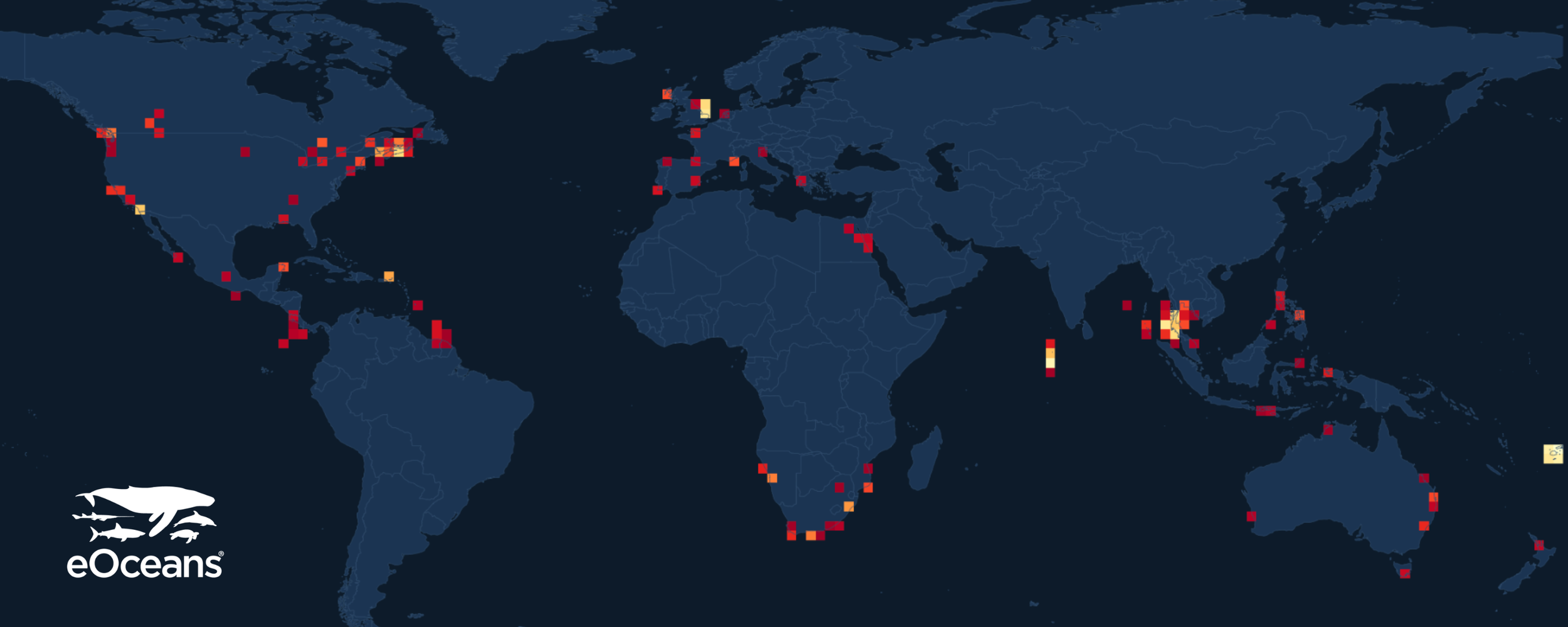
scale projects from local initiatives to global programs
Whether your project contains hundreds of observations or millions, the workflow remains consistent.

Designed to help you do more
Where traditional workflows rely on disconnected software, manual processing, and repeated analyses, eOceans automates much of the technical work behind the scenes.
As a result, organizations can:
deliver results faster
reduce analytical and reporting costs
improve consistency across projects
update outputs automatically as new data arrive
increase transparency and reproducibility
spend more time making decisions and less time managing data
Who uses eOceans
eOceans supports organizations of every size, including:
governments and regulators
environmental consultants
offshore developers
fisheries organizations
NGOs and conservation organizations
Indigenous organizations and local communities
researchers and universities
industry and corporate sustainability teams
multilateral organizations and funders
educators and citizen science programs
Whether you're managing one project or hundreds, eOceans scales with your mission.
When is eOceans the right fit
eOceans delivers the greatest value when:
decisions depend on quantitative information
evidence must support important decisions
data have both space (location) and time components
observations are collected repeatedly over time
projects need to scale without proportional increases in effort
transparency and reproducibility are essential
reporting consumes too much time
teams need to do more with limited capacity
From questions to decisions, eOceans has you covered.
Clients, Partners