
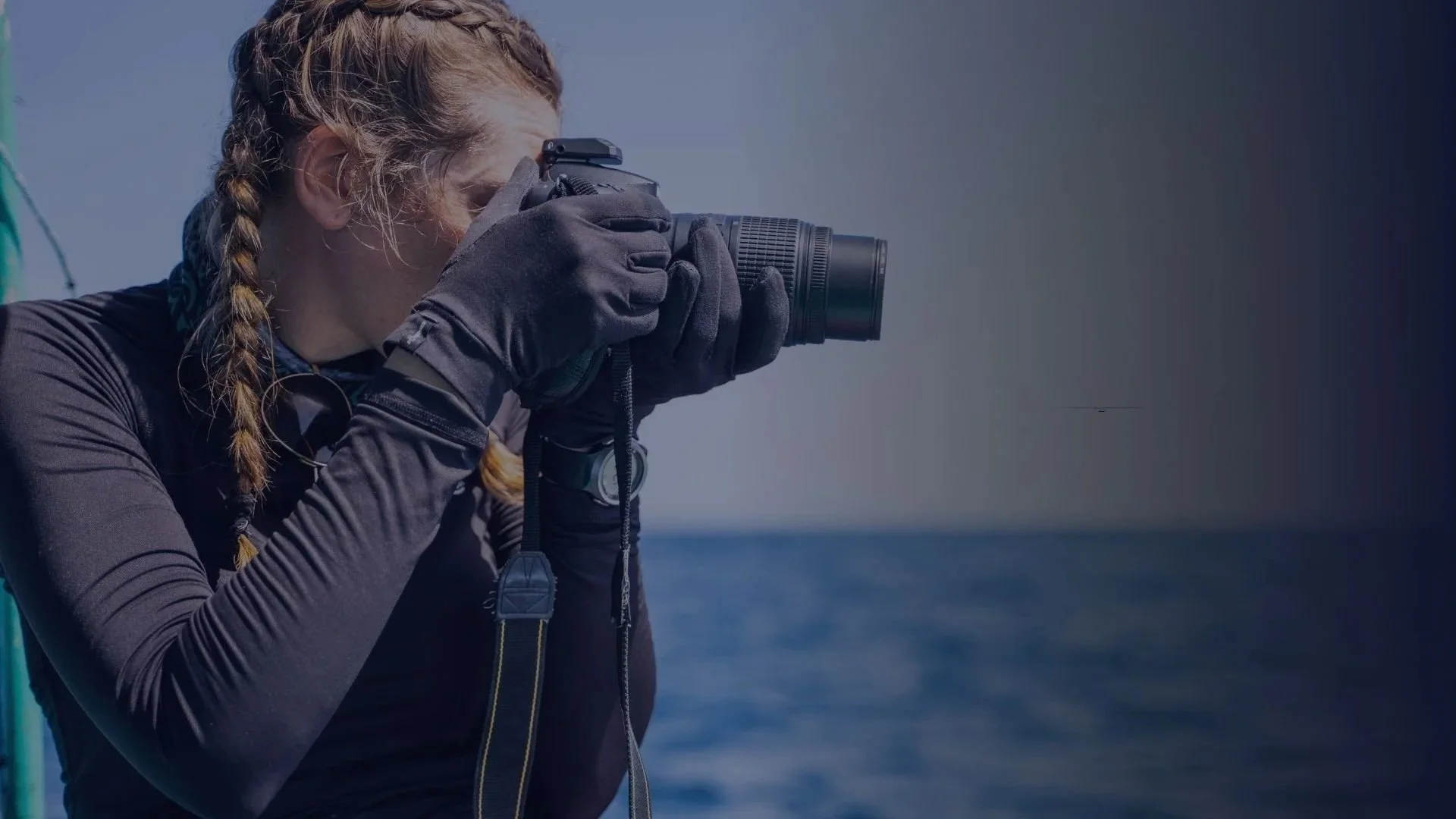
Beyond Citizen Science: Why Participatory Data Is Essential
Good science isn't defined by who collects the data.
“Citizen science” is often treated as a synonym for lower-quality data. That misses the point.
Data quality depends on the question being asked, what is being observed, how data are collected, who is making the observations, their experience and training, under what conditions, and how the observation is validated—not simply whether the observer is a professional scientist or a volunteer.
A trained researcher conducting a standardized survey can produce highly comparable data. So can a trained community member. An experienced local observer may notice something that a formal survey misses. A scientist making observations on a weekend can contribute opportunistic data. A photograph taken by a member of the public may provide the first evidence of a rare species in an area.
These aren't simply “good” or “bad” data. They are different types of evidence that can be useful for different questions.
The question should determine the approach.
If you are estimating population abundance or measuring long-term change, a carefully designed and standardized survey may be essential. If you are trying to detect an invasive species, document plastic pollution, find a rare animal, or identify an unusual event, broad and frequent opportunistic observations may be incredibly valuable.
Sometimes you need both.
A formal monitoring program might identify a trend but miss what happens between surveys. Community observations can help fill those gaps. A community network might detect something unusual, while expert surveys can investigate and quantify it. One approach can show where more monitoring is needed, while another provides the detailed evidence to answer the question.
We don't see these as competing approaches. We see them as parts of the same evidence system.
Expertise matters—but “professional” and “volunteer” aren't measures of expertise.
A paid technician may have little experience identifying a particular species. A volunteer may have decades of knowledge of their local ecosystem. A scientist can be a citizen scientist when they are contributing observations outside their own research.
What matters is understanding the observer and the observation.
eOceans® preserves information about who collected an observation, their expertise or training, the method used, the level of standardization, and any supporting or validation evidence. That context stays with the data, so you can use observations appropriately without pretending they are all equivalent.
Look at the evidence with—and without—experts.
This is one of the reasons we don't think observations need to be separated into a simple “citizen science” versus “scientific” bucket.
With eOceans®, you can look at your results using different subsets of the evidence. You can compare observations from expert observers with the full dataset, examine different methods or protocols, and see whether the patterns remain consistent.
That lets you ask much more useful questions:
Does the pattern remain when we only use expert observations? Where are opportunistic observations filling gaps in formal monitoring? Where do we need more standardized sampling? Are different observer groups seeing the same trends?
Instead of debating whether citizen science data is “good enough,” you can examine what the evidence actually tells you.
Connect the evidence without losing the differences.
eOceans® can bring together scientific surveys, professional monitoring, community and participatory science, opportunistic observations, historical datasets, sensors, cameras, and other evidence.
The goal isn't to make all of these observations look the same. It is to make them usable together while keeping the differences visible.
That means you can build a more complete picture without losing the information needed to understand how that picture was created.
You can see where evidence is strong, where it is limited, where different sources agree, and where more observation or expert investigation is needed.
Science first. More people can contribute.
eOceans® isn't a “citizen science platform.” It is a science and evidence platform that supports expert-led science, professional monitoring, citizen science, community science, and participatory research in the same system.
Because the goal isn't to choose between experts and communities.
It's to make the most of every useful observation, while being transparent about what each observation can—and cannot—tell you.
Build a more complete, transparent, and defensible evidence base.
→ Get powered by eOceans®